Açıklama
Bartın’ın bir ilçesi olan Amasra, başlangıçta Sesamos ismiyle M.Ö 7.yüzyılda bir koloni kenti olarak kurulmuş, Hellenistik Dönemde Amastris ismiyle yeniden imar edilmiş ve Orta Çağ’ın sonlarına kadar önemini neredeyse hiç yitirmemiş bir antik kente ev sahipliği yapmaktadır. Amastris Antik Kenti Karadeniz’in antik coğrafyasında Paphlagonia bölgesinin kıyı kesiminde Herakleia Pontike (Kdz. Ereğli) ve Tios (Filyos)’un doğusunda yer almaktadır.
Antik yerleşimle ilgili en erken veriler Koloni Çağından gelmektedir. M.Ö 7. yüzyılda Miletos’un bir kolonisi olarak “Sesamos” adıyla kurulmuştur. Sesamos isminin geçtiği en erken kaynak Homeros’un İlyada isimli eseridir. Ünlü Yunan şair eserinde Amasra’dan: “Kromna’dan, Parthenios Irmağının suladığı topraklardan, Sesamos ve Kydoros’tan gelen vahşi katırları pek meşhur olan Enetler’in ve Paphlagonialılar’ın başında korkusuz yürekli Pylaimenes…” cümlesiyle bahseder. Sesamos yerleşimine dair elde edilebilen yegâne maddi kanıt sikkelerdir.
Herakleia Pontike tiranı Dionysios’un karısı olan Amastris, son Pers Kralı Dareios’un soyundan gelen bir Pers Prensesidir. Dionysios’un ölümünün ardından (MÖ 305), Diadokh Lysimakhos ile evlenen Amastris, M. Ö 301 yılında Sesamos kentini synoikismos yoluyla Tion, Kromna ve Kytoros yerleşimlerini de içerisine alarak “Amastris” ismiyle yeniden kurmuştur. Kraliçe Amastris’in kurduğu kente dair tek ipucu bastırdığı sikkelerdir. Kent Hellenistik Dönem boyunca Pontus Krallığı hâkimiyetinde yer alır. Ardından M. Ö 66’daki Pompeius’un Mithridates VI Eupator’u yenmesinin ardından Roma hâkimiyetine girer ve Pontus ve Bithynia Eyaletinin bir üyesi olur. Bizans döneminde varlığını sürdüren kent, 13.yüzyılda Ceneviz kolonisi haline gelir ve 1461 yılında Fatih Sultan Mehmet’in Karadeniz seferinde Osmanlı topraklarına katılıncaya kadar Ceneviz yerleşimi olarak varlığını sürdürür.
2017 yılında Amasra Kum Mahallesi’ndeki okul inşaatı sırasında tarihi kalıntılara rastlanmasının ardından bölge koruma altına alınarak Amasra Müzesi Müdürlüğünce ilçedeki arkeolojik çalışmalar başlatılmıştır. Bir süre ara verilen çalışmalar, 2022 yılında Amasra Müzesi Müdürlüğü başkanlığında, Bartın Üniversitesi Öğretim Üyesi Prof. Dr. Fatma Bağdatlı Çam danışmanlığında sürdürülmüştür. 2024 yılında Cumhurbaşkanı kararnamesi ile bilimsel kazı alanı olarak ilan edilen yerleşimdeki kazılar, Prof. Dr. Bağdatlı Çam’ın bilimsel başkanlığında devam etmektedir.
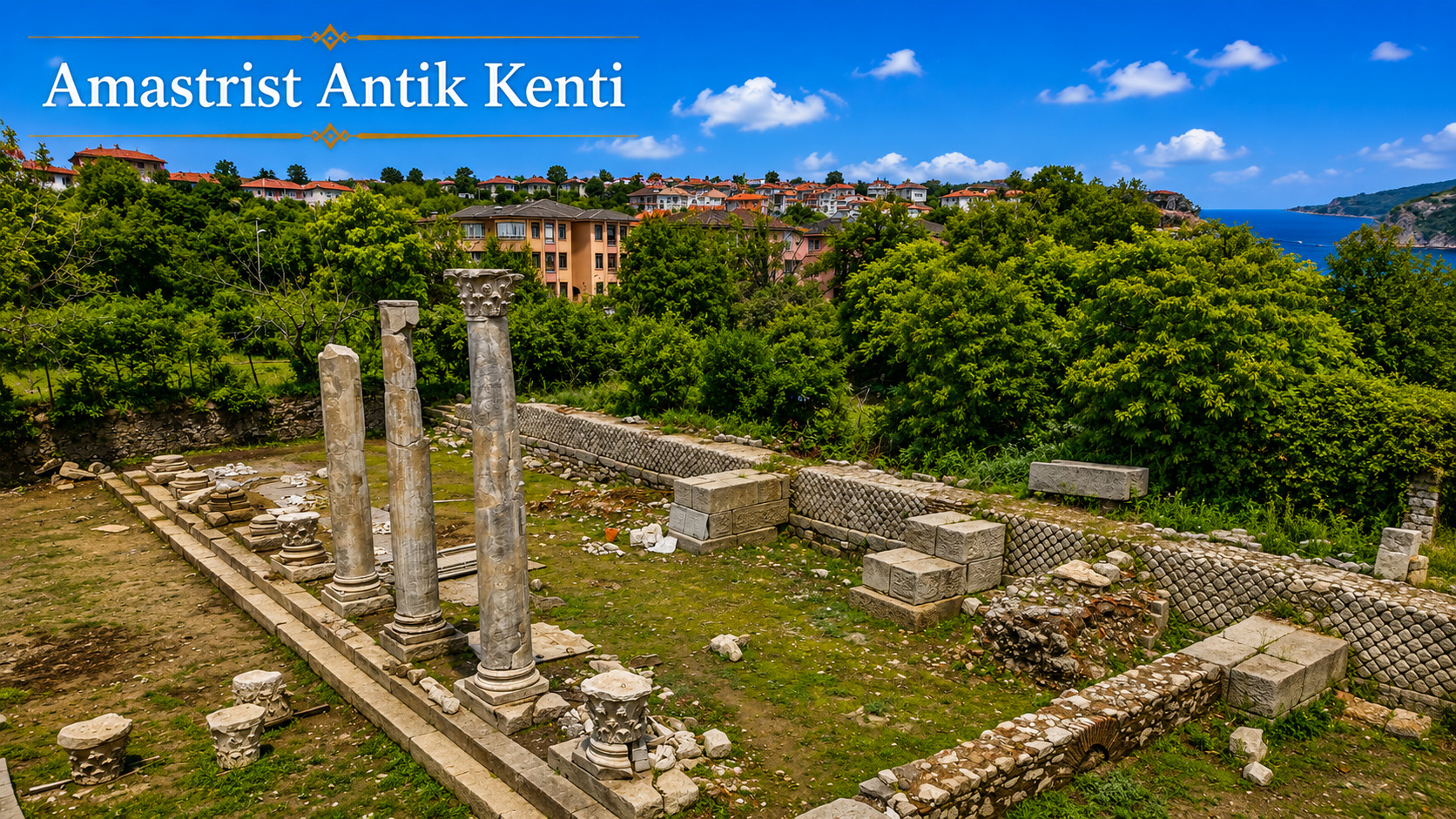
Kültür ve Turizm Bakanlığı Kültür Varlıkları ve Müzeler Genel Müdürlüğünün izni ve Türkiye Petrolleri Anonim Ortaklığının destekleriyle şuana kadar yapılan kazı çalışmalarında; 2 bin yıllık stoa ( Sütunlu galeri) ,Büyük İskender başı, Nymphe (su perisi), Lares (ev tanrısı) heykelleri, Amulet (tılsımlı muska) ve farklı dönemlere ait sikkeler ve yazıt parçaları gibi eserler bulunarak ülke turizmine kazandırılmıştır.
Kazı çalışmalarında ortaya çıkan en önemli eser olan Karadeniz Bölgesi’nde bulunan yegâne stoa yapısı; Korint düzeni, sütun başlıkları ve mimari bezemeleriyle Akdeniz ve Ege Bölgesi’nden bildiğimiz Efes, Afrodisyas, Perge ve Side gibi antik kentlerde gördüğümüz anıtsal mimarinin, Amastris gibi Karadeniz’in kıyısındaki küçük bir liman kentinde de olduğunu ve bu anıtsallığı sergilediğini göstermektedir.
Amasra (Amastris) Ancient City
Amasra, a district of Bartın, was originally founded as a Milesian colony city under the name Sesamos in the 7th century BC. Later It was reconstructed under the name Amastris during the Hellenistic period and hosted an ancient city that retained its significance almost entirely until the end of the Middle Ages. The ancient city of Amastris is located on the Black Sea coast in the Paphlagonia region, east of Herakleia Pontike (Kdz. Ereğli) and Tios (Filyos).
The earliest data concerning the ancient settlement date back to the period of colonization. It was founded in the 7th century BC as a colony of Miletus under the name The earliest source mentioning the name Sesamos is Homer’s Iliad..In his epic, the famous Greek poet refers to the settlement as follows: “From Cromna, from the land watered by the river Parthenios, from Sesamos and Kydoros came the Paphlagonians, famed for their wild mules, led by the fearless-hearted Pylaimenes.” The only surviving archaeological evidence from Sesamos consists of coinage.
Amastris, the wife of Dionysios, tyrant of Heraclea Pontica, was a Persian princess descended from the last Persian king Darius. After Dionysios’ death (305 BC), she married the Diadoch Lysimachus. In 301 BC, she reestablished the city of Sesamos as ‘Amastris’ through synoikismos, incorporating the nearby settlements of Tion, Cromna, and Kytoros, and gave the new city her own name, Amastris. Coins minted under her authority provide the sole material testimony of her rule. The city remained under the rule of the Kingdom of Pontus throughout the Hellenistic period. Following the defeat of Mithridates VI Eupator by Pompeius in 66 BC, the city came under Roman rule and became part of the province of Pontus et Bithynia. Amastris continued its existence throughout the Byzantine period, later becoming a Genoese colony in the 13th century. It remained under Genoese control until 1461, when it was incorporated into the Ottoman Empire by Mehmed II during his Black Sea campaign.
Following the discovery of historical remains during the construction of a school in Amasra’s Kum Mahallesi in 2017, the area was placed under protection and archaeological work in the district was initiated by the Amasra Museum Directorate. After a brief hiatus, excavations resumed in 2022 under the direction of the Amasra Museum and the scientific consultancy of Prof. Dr. Fatma Bağdatlı Çam of Bartın University. In 2024, the settlement was declared an official scientific excavation site by Presidential Decree, and work continues under the scientific leadership of Prof. Dr. Bağdatlı Çam.
With the permission of the Ministry of Culture and Tourism’s General Directorate of Cultural Herritage and Museums and with the support of Turkish Petroleum Corporation, excavation work carried out to date has uncovered a 2,000-year-old stoa (columned gallery), a bust of Alexander the Great, statues of Nymphs (water spirits) and Lares (household gods), amulets, and coins and inscription fragments from different periods have been discovered and added to the country’s tourism assets.
The most significant discovery is the yegânestoa structure, the only known example of its kind in the Black Sea region.With its Corinthian order, column capitals and architectural ornamentation, demonstrates that the monumental architecture known from ancient cities of the Ephesus, Aphrodisias, Perge and Side in the Mediterranean and Aegean regions was also present in Amastris, a relatively small harbor city on the Black Sea,, and that it displayed this monumentality.